
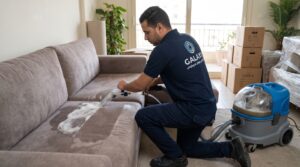
In the residential care and cleaning industry across Cairo and Giza, homeowners frequently look for the best method to revive their soiled sofas, armchairs, and mattresses. For years, conventional thinking relied heavily on hot steam applications. However, modern textile chemistry and fluid dynamics have proven that outdated thermal steam cleaning often causes severe, irreversible damage to delicate furniture.
Today, advanced non-steam injection-extraction—combining engineered surfactant foam with high-velocity negative-pressure suction—has established itself as the gold standard for restorative textile care.
This comprehensive technical guide from the specialists at Galaxy Home Service explains the fluid dynamics, chemistry, and fabric mechanics behind professional deep suction and foam extraction, and why this method far outperforms outdated steam systems.
1. The Physics and Fluid Dynamics of Soil Suspension
To remove deep-seated grit, biological matter, and oxidized oils from furniture, cleaning cannot merely skim the surface. It requires four coordinated physical factors known in textile science as TACT:
-
Time (Chemical Dwell): Allowing specialized cleansing agents to dwell within the fiber structure to loosen adhesive bonds between dust particles and fabric yarns.
-
Agitation (Controlled Mechanical Action): Gentle, unidirectional grooming with horsehair or ultra-soft synthetic brushes to separate matted fibers without fraying delicate yarns.
-
Chemistry (Engineered Foam & Surfactants): Formulated low-moisture cleaning foam encapsulates dissolved oils, suspending them in micro-bubbles rather than driving them deeper.
-
Temperature & Hydraulic Pressure (Dynamic Extraction): Utilizing controlled fluid pressure and immense air vacuum velocity (water lift) to pull suspended pollutants out into an external recovery tank.
2. Why Outdated Steam Cleaning Fails and Damages Modern Upholstery
While high-temperature steam is valuable for industrial hard surfaces and engine blocks, applying pressurized steam to living room upholstery introduces major hazards:
-
Thermal Fiber Shock & Melting: Most modern living room fabrics consist of synthetic polymers such as polyester, acrylic, polypropylene, or delicate blends with viscose. Pressurized steam exceeds the thermal threshold of these fibers, causing irreversible structural shrinking, crimp loss, and fiber melting.
-
Cellulose Browning & Water Rings: When steam condenses inside plant-based fibers like cotton or linen, moisture dissolves lignin and natural tannins inside the structural core. As the dampness slowly evaporates, these tannins migrate to the exterior surface, forming dark, unsightly brown rings known as cellulose browning.
-
Internal Foam Over-Saturation: Steam is gaseous water under pressure. When blasted into upholstery, it immediately penetrates through the fabric into the thick polyurethane foam core below, condensing back into liquid water. Without high-suction water extraction, the deep foam remains saturated for days, creating a breeding ground for mold, mildew, and foul sour odors.
-
Setting Protein-Based Stains: High heat instantly “cooks” and coagulates protein-based residues (such as milk, biological spills, food sauces, and blood) directly into the textile pores, making subsequent stain removal chemically impossible.
3. The Extraction Process: Step-by-Step Breakdown
Professional non-steam extraction works through a calibrated mechanical and pneumatic sequence:
Phase 1: High-Efficiency Dry HEPA Evacuation
Before any liquid touches the furniture, industrial vacuums operating at high CFM (cubic feet per minute) strip loose sand, microscopic silica dust, and pet dander from the fabric weave. Removing dry debris while dry prevents it from turning into muddy sludge inside the internal batting.
Phase 2: Active Dense Foam Encapsulation
Rather than drenching the sofa in liquid water, the technician applies dense, pH-balanced cleaning foam. The active surfactant molecules feature a hydrophilic (water-attracting) head and a lipophilic (oil-attracting) tail. The lipophilic tail latches onto oily grime and skin sebum, pulling it away from the yarn, while the micro-foam encapsulates the debris in suspension at the surface level.
Phase 3: High-Pressure Solution Injection and Instant High-Vacuum Recovery
The professional extraction wand features an integrated pressure spray jet positioned millimeters ahead of a precision vacuum recovery slot:
-
The machine injects a controlled, atomized neutralizing rinse through the surface layer to wash away the foam-encapsulated grime.
-
Milliseconds later, high-performance two-stage vacuum motors generate intense vacuum lift (measured in inches of water column lift), pulling over 90% to 95% of the injected moisture, suspended soils, and dissolved oils directly into the recovery waste tank.
-
Because the suction slot immediately follows the spray jet, moisture never penetrates into the deep core foam padding below.
Phase 4: High-Velocity Aeration and Rapid Curing
Because the deep foam core was never saturated, residual surface moisture evaporates rapidly. Directed air movers and natural room ventilation ensure full fabric curing within just 2 to 4 hours, eliminating any risk of damp smells or mold formation.
4. Comparing Cleaning Technologies
| Feature | Outdated Steam Cleaning | Professional Deep Foam Extraction |
| Core Moisture Exposure | High (Deep saturation into foam) | Strictly controlled (Surface and sub-surface only) |
| Drying Time | 1 to 3+ hours (High mold risk) | 6 to 12 hours |
| Fiber Safety | High risk of melting synthetics/viscose | Safe across synthetics, linen, chenille, and velvet |
| Soil Removal Efficacy | Pushes soil deeper; leaves residue | Physically extracts soil into a sealed tank |
| Color Bleeding Risk | High (Heat accelerates dye bleed) | Minimized (Cold/lukewarm pH-balanced rinses) |
5. Frequently Asked Questions (FAQ)
Does non-steam foam extraction eliminate bad odors completely?
Yes. Unlike surface deodorizers that simply mask smells, injection-extraction pulls the actual source of the odor—such as bacteria, pet dander, spilled milk, or body oils—out of the fabric. Neutralizing rinse agents then balance the pH to prevent lingering scents.
How soon can we sit on the sofa after extraction cleaning?
Thanks to high-suction vacuum extraction that removes over 90% of moisture immediately, most sofas and upholstery dry fully within 2 to 4 hours under normal room airflow.
How is the pricing for professional upholstery extraction calculated?
Pricing is evaluated based on the sofa configuration and total seating capacity, textile fiber composition, the level of embedded soiling, and whether specialty stain treatments (for ink, grease, or tannins) are required. Clear photos of the furniture allow technicians to provide accurate evaluations.
Ready to experience scientific, restorative deep cleaning for your living room upholstery? Discover the advanced Non-Steam Foam Extraction & Deep Upholstery Cleaning Services from Galaxy Home Service across Cairo and Giza.