
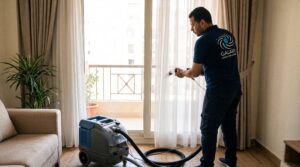
Sheer window drapery creates an airy, elegant aesthetic while regulating direct daylight and maintaining daytime privacy. In urban residences across Cairo and Giza, however, sheer fabrics act as constant air filters. They capture airborne dust, fine desert sand, kitchen aerosolized oils, and vehicle emissions drifting in from balconies and open windows.
Among lightweight drapery choices, voile and chiffon are the two most popular textiles, yet they possess distinct fiber compositions, yarn twists, and maintenance vulnerabilities. Misidentifying the fabric or applying standard laundry practices frequently results in thread distortion, permanent shrinkage, yellowing, or frayed hems.
This guide breaks down the structural differences between voile and chiffon drapery, fabric-specific laundering instructions, safe in-situ steaming protocols, and environmental preservation tips.
1. Structural Comparison: Voile vs. Chiffon
Understanding the textile architecture of your drapery is critical before applying water, heat, or cleaning surfactants:
| Technical Feature | Voile Fabric (الڤوال) | Chiffon Fabric (الشيفون) |
| Yarn & Weave | Plain weave using tightly twisted, combed multi-ply yarns | Plain weave using high-twist (crepe twist) alternating S- and Z-yarns |
| Fiber Base | Historically 100% combed cotton; modern drapery blends cotton with polyester | Primarily synthetic polyester; occasionally silk in luxury installations |
| Texture & Hand-Feel | Crisp, slightly structured, semi-sheer with a smooth surface | Flowing, feather-light, textured crêpe finish with high drape fluidness |
| Light Diffusion | Soft, matte light diffusion with moderate glare reduction | Shimmering, ethereal light scatter with delicate transparency |
| Moisture Vulnerability | High shrinkage risk if natural cotton-rich; water-tolerant if polyester | Prone to puckering and water spots; snag-sensitive on ring clips |
2. Why Sheer Drapery Discolors in Urban Environments
Before executing any cleaning procedure, homeowners must understand the underlying causes of fabric degradation:
-
UV Oxidation and Fiber Brittleness: Constant exposure to the Mediterranean and Egyptian sun degrades polymer bonds in sheer fabrics. Over time, UV radiation yellows polyester and weakens natural cellulose fibers, turning curtains brittle along sunny crease lines.
-
Microscopic Airborne Particulate Settling: Fine desert silica dust settles deep into the porous interstitial gaps of the weave. If moisture is applied without prior dry dust extraction, the dust turns into muddy residue that locks deep into the core yarn.
-
Oxidized Grease Particles: In modern open-concept floor plans, cooking vapors migrate to nearby living room drapery. Fats deposit on cool fabric surfaces, creating an adhesive layer that binds airborne pollutants.
3. Pre-Washing and Inspection Protocol
Before taking down sheer panels or applying moisture, complete these preparatory checks:
-
Fiber & Seam Inspection: Hold the fabric against bright daylight. Check for thread fraying along the weighted hem or sun-rotted sections near the window contact line. If fibers are fragile, avoid machine agitation entirely.
-
Dust Shaking & Controlled Pre-Vacuuming: Never submerge dusty curtains directly in water. Carefully shake panels outdoors on the balcony, or use a low-suction canister vacuum equipped with a soft, clean horsehair dusting brush attachment.
-
Hardware Removal: Detach metal drapery hooks, clips, plastic gliders, and lead weight strips sewn into corners. Rust-prone metal components cause permanent staining during washing.
4. Cleaning Protocols by Fabric Type
Protocol A: Caring for Voile
Cotton-blend voile maintains a tailored drape, but natural fibers contract under thermal stress:
-
Water Temperature: Cold to lukewarm only (never exceed 30°C). Hot water triggers irreversible fiber shrinkage.
-
Detergent Selection: Use a neutral liquid detergent formulated for delicates. Avoid powdered detergents, which leave chalky streaks on semi-translucent textiles, and never use chlorine bleach (which attacks cotton and turns synthetic polyester yellow).
-
Washing Method: Hand-wash inside a clean bathtub, gently pressing soapy water through the fabric without wringing. If using a front-load washing machine, select the delicate/wool cycle, disable high-speed spin (limit to 400 RPM maximum), and place panels inside a mesh laundry bag.
Protocol B: Caring for Chiffon
Chiffon’s crêpe twist makes it prone to seam puckering and friction-induced runs:
-
Static and Snag Prevention: Synthetic chiffon builds static electricity, attracting fine dust rapidly. Add a tiny measure of fabric conditioner in the final rinse to neutralize static charges.
-
Gentle Agitation: Submerge and gently swirl the fabric for 3 to 5 minutes. Avoid twisting or scrubbing shears against each other, as mechanical friction ruptures high-twist filament threads.
-
Drip-Drying Protocol: Do not tumble dry sheer chiffon. Remove panels, roll them gently in a clean white cotton terry towel to absorb excess dripping, and immediately rehang them on their rods while damp. Gravity naturally pulls out micro-creases without mechanical stress.
5. In-Situ Steam Cleaning and Maintenance (Without Dismantling)
Taking down floor-to-ceiling sheer drapery across sprawling villa windows or high-ceiling living rooms is labor-intensive and risks bending delicate pleat tapes. In-situ vertical steam cleaning offers a rapid, highly effective alternative:
-
Safe Nozzle Clearance: Keep the handheld garment steamer head approximately 10 to 15 cm away from chiffon. Direct contact with superheated metal plates can melt polyester fibers instantly.
-
Downward Sweeping Motions: Work systematically from the header pleats down to the bottom hemline, allowing gravity and controlled moisture to release wrinkles and eliminate lingering household odors.
-
Temperature Moderation: Ensure the steamer delivers continuous micro-fine vapor rather than heavy water droplets, which create localized water spots on textured weaves.
6. Frequently Asked Questions (FAQ)
Can I machine-wash sheer voile and chiffon curtains together?
It is not recommended. Voile is generally heavier and slightly more structured than gossamer chiffon. Agitating them together creates friction that can pull threads or cause snagging on delicate chiffon hems. Always wash them in separate delicate batches.
How do I remove grayish or yellowish discoloration from white sheer curtains?
Avoid chlorine bleach, which chemically burns polyester fibers and accelerates yellowing. Instead, soak dull sheer panels in lukewarm water infused with oxygen bleach (sodium percarbonate) or a quarter cup of white vinegar for 1 to 2 hours before gentle washing.
How often should window drapery be cleaned in Cairo and Giza?
In metropolitan areas with frequent dust accumulation, a light dry dusting or in-situ vertical steaming should be performed every 3 to 4 months. Comprehensive deep washing or professional extraction should take place every 6 to 12 months.
How are professional curtain and upholstery cleaning services evaluated?
Quotes depend on total fabric meterage, window drop height (floor-to-ceiling dimensions), fabric composition (synthetic chiffon vs. natural cotton voile or silk), pleat style, and whether on-site steam extraction or deep laundering is required. Clear photos of the window setup allow technicians to provide accurate evaluations.
Need expert curtain care without the hassle of dismantling? Discover our specialized Deep Upholstery & Drapery Cleaning Services across Cairo and Giza for effortless, safe restoration.