
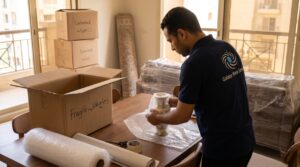
Relocating across Cairo and Giza presents unique logistical hurdles. Moving delicate household treasures—fine crystal, porcelain dinnerware, antique vases, and high-end electronics—through bustling urban traffic, high-rise stairwells, and external elevators demands far more than casually tossing items into spare cardboard cartons.
The primary culprit behind shattered ceramics and fractured glass during a home move is not rough driving; it is inadequate internal cushioning, box failure from overloading, and direct contact between rigid surfaces. When unpadded fragile items shift inside a moving vehicle, road vibrations and inertia create micro-fractures that easily lead to catastrophic breakage.
This engineering-grade guide from the relocation and logistics specialists at Galaxy Home Service details the essential tools, professional wrapping methodologies, and box-engineering techniques required to ensure every fragile heirloom arrives at your new residence intact.
1. Professional Packaging Arsenal: What You Actually Need
Before packing a single glass, secure professional-grade packing materials. Standard thin newspaper is an inferior choice because newspaper ink bleeds into porous china and newsprint provides zero shock absorption.
-
Heavy-Duty Double-Walled Corrugated Boxes: Standard single-wall boxes collapse under vertical stacking pressure. Always use double-walled (DW) cartons for heavy or fragile items.
-
Multi-Layer Bubble Wrap: Use small-bubble rolls (3/16″) for surface scratch protection and tight contouring, and large-bubble rolls (1/2″) for overall void-filling and shock absorption.
-
Unprinted Newsprint (Packing Paper): Clean, ink-free white butcher/packing paper for creating scrunched-up shock-absorbing cushions and wrapping delicate porcelain.
-
Heavy-Duty Packaging Tape: Polypropylene or PVC packing tape (at least 2 inches wide). Avoid masking tape or duct tape, which fail under humidity or shear tension.
-
Corrugated Cell Dividers: Cardboard partition grids specifically sized to isolate stemware, crystal tumblers, and specialty glassware.
2. The Foundation: Engineering the Perfect Cushion Box
A fragile-item carton must function like a shock-absorbing crumple zone in an automobile. Follow this foundational structure:
-
Reinforcing the Base (The “H-Tape” Method): Tape along the center seam of the box bottom, and run cross-strips along both perpendicular edge seams (forming an “H”). This prevents the bottom flaps from blowing out under heavy loads.
-
Creating the Base Crumple Layer: Crumple 4 to 6 sheets of unprinted packing paper into loose, resilient “paper nests” and place them across the entire bottom floor of the box, creating a minimum 2-inch shock-absorbing foundation.
-
Weight Distribution Hierarchy: Always pack the heaviest items (e.g., stoneware platters, heavy ceramic pots) at the bottom layer, and place lightweight stemware and delicate crystal exclusively on the top layer.
-
The Top Crumple Layer & Zero-Movement Test: Fill all remaining top gaps with crumpled paper or large bubble wrap so the items cannot move. Close the flaps and gently shake the box: if you feel or hear anything shifting, reopen and add more packing paper until the contents are completely immobilized.
3. Step-by-Step Protocols for Specific Fragile Assets
Different household items feature unique stress points. Customize your wrapping technique accordingly:
A. Fine China and Dinner Plates (Pack Vertically, Never Flat)
-
The Fatal Mistake: Stacking plates flat on top of each other concentrates all vertical transit shock onto the fragile center of the bottom plate, causing it to crack under pressure.
-
The Professional Way:
-
Lay a sheet of packing paper flat. Place a plate in the center, fold a corner over, place the next plate, and fold the remaining corners until you have a bundle of 3 to 4 plates.
-
Wrap the entire bundle in bubble wrap and secure it with tape.
-
Pack the bundled plates vertically on their edges, standing like vinyl records in a crate. This structural orientation distributes pressure along the strongest perimeter rim.
-
B. Stemware and Crystal Wine Glasses
-
Internal Cavity Support: The hollow bowl of a wine glass is its weakest structural point. Gently stuff crumpled tissue or packing paper inside the bowl to provide internal counter-pressure.
-
Stem Wrapping: Wrap the fragile thin stem with rolled bubble wrap to equalize its diameter with the base and bowl.
-
Cylinder Roll: Roll the entire glass in two sheets of packing paper, tucking in the ends like a burrito, and pack it vertically upright (never on its side) inside partitioned cardboard cell dividers.
C. Mirrors, Large Glass Frames, and Artwork
-
The “X” Tape Technique: Run high-grade painter’s tape corner-to-corner across the face of the glass in a large “X”. If the glass experiences severe flexural impact, the tape holds fractured shards together, preventing sharp shards from slicing into the underlying canvas or artwork.
-
Rigid Corner Protectors: Fit all four corners with pre-formed corrugated cardboard or foam edge caps.
-
Telescoping Mirror Cartons: Slide the wrapped frame inside a specialized telescoping picture box that snugly clamps the frame without leaving internal voids.
D. Porcelain Vases, Antiques, and Statues
-
Stuff internal cavities of vases with crumpled clean tissue.
-
Wrap handles, delicate spouts, or sculptural extensions separately with narrow strips of bubble wrap.
-
Encase the entire silhouette in multiple layers of 1/2″ large bubble wrap, seal with tape, and nest it securely within deep layers of packing peanuts or dense paper cushioning.
4. Clear Labeling and Loading Best Practices
Impeccable packing is pointless if the moving crew stacks a 30-kilogram tool chest on top of your crystal collection:
-
High-Contrast Multi-Side Labeling: Mark “FRAGILE – زجاج قابل للكسر” in bold red marker on at least three sides of the carton, as well as the top.
-
Directional Orientation Arrows: Draw clear upward arrows indicating “THIS SIDE UP ↑” so movers never invert stemware or edge-packed dinner plates.
-
Designated Destination Notation: Clearly write the exact room destination (e.g., “Dining Room – China Cabinet”) to prevent unnecessary handling or rearranging at the new property.
-
Truck Placement Protocol: Fragile cartons should never be placed near loose, heavy items. Secure them beneath sturdy tables or strapped into dedicated, tiered bulkheads within fully enclosed transport trucks.
5. Frequently Asked Questions (FAQ)
Can I use household towels, blankets, and clothing to pack fragile items?
Clean cotton towels and soft linens work well as supplementary void-fillers between cardboard layers. However, do not use them as the primary wrapping for delicate glassware because fabrics slip easily, lack rigid puncture resistance, and unroll during handling.
How heavy should a fragile-item moving box be?
As a strict rule, keep fragile-item cartons under 15 to 18 kilograms (35 to 40 lbs). An overly heavy box places massive compressive load on the bottom layer and increases the risk of the mover dropping the box due to awkward handling.
How does Galaxy Home Service calculate fragile packing and moving services?
Estimates are calculated based on the volume and nature of the fragile inventory (e.g., fine art, custom chandeliers, extensive china sets), the quantity of specialized packing materials required (custom crates, double-wall boxes, bubble rolls), floor levels, and whether technical disassembly or hydraulic exterior hoists are necessary. Sharing clear photos of the items allows technicians to configure the exact packing plan.
Want complete peace of mind that your treasured fragile possessions will arrive safe and sound? Rely on the white-glove packing, custom protection, and relocation specialists at Galaxy Home Service across Cairo and Giza.