
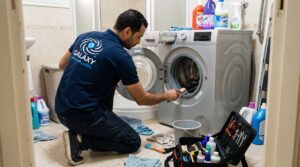
A modern washing machine is one of the hardest-working household appliances in any home across Cairo and Giza. Whether handling heavy loads of daily laundry or washing delicate garments, the appliance is subjected to constant moisture, fabric softeners, laundry detergents, and mineral-rich municipal water.
Over time, these elements combine inside hidden internal drums, rubber door gaskets, and detergent dispensers to create stagnant slime, black mold, and persistent musty odors. When foul smells begin transferring onto freshly washed clothes, or when the machine starts vibrating excessively during spin cycles, it is a clear sign that routine maintenance has been neglected.
This technical maintenance and troubleshooting guide from the appliance service specialists at Galaxy Home Service details step-by-step methods to eliminate stubborn mold, prevent unpleasant odors, and extend the operational lifespan of your washing machine.
1. The Root Causes of Washing Machine Odors
Understanding why odors develop helps you target the source rather than just masking the symptoms:
-
Biofilm and Detergent Residue: Liquid fabric softeners and heavy washing powders leave a sticky organic film on the outer drum and internal hoses. Combined with lint and skin cells, this film creates a breeding ground for bacteria and mold (biofilm).
-
Trapped Moisture in Rubber Gaskets: Front-load washing machines feature a flexible rubber bellows seal around the door opening. When the door is closed immediately after a wash cycle, trapped water and detergent residue stagnate in the lower folds, producing black mold spots and foul odors.
-
Drain Pump Filter Clogs: Coins, lint, pet hair, and paper debris accumulate in the lower drain pump filter. When water cannot drain completely, stagnant dirty water sits in the sump hose and begins to smell.
2. Step-by-Step Odor Control and Deep Cleaning Protocol
Cleaning your washing machine requires a methodical approach combining natural sanitizers and physical detailing:
A. Cleaning the Rubber Bellows Seal
-
After every wash cycle, wipe down the folds of the front-load rubber door gasket with a dry microfiber cloth to remove trapped water and soap scum.
-
Once a month, wipe the seal with a mild solution of white vinegar and water to eliminate emerging mold spores. Never use harsh bleach directly on rubber, as it degrades the elasticity.
B. Sanitizing the Internal Drum (Hot Water Cycle)
-
Run an empty cleaning cycle once a month at 60°C or higher.
-
Add two tablespoons of citric acid or a specialized washing machine cleaning tablet directly into the drum. The high temperature combined with the descaling agent dissolves mineral scale and strips away hidden detergent buildup.
C. Maintaining the Detergent Dispenser Drawer
-
Pull the detergent drawer completely out (press the release tab if necessary).
-
Wash away caked-on softener residue and mold using warm water and an old toothbrush. Clean out the internal roof of the dispenser housing where black mold frequently hides.
3. Routine Preventative Habits for Daily Operation
Adopting these simple daily habits will keep your washing machine fresh and odor-free:
-
Leave the Door Ajar: After completing your final wash of the day, leave the washing machine door or lid open by a few inches to allow air circulation and internal moisture evaporation.
-
Measure Detergent Accurately: More soap does not mean cleaner clothes. Excess detergent fails to dissolve fully and coats internal drum surfaces, feeding bacterial growth. Use the exact recommended dosage for your load size.
-
Clean the Drain Filter Quarterly: Locate the small access panel at the bottom corner of your machine, place a shallow tray underneath, unscrew the filter plug, and remove trapped debris and hair.
4. Washing Machine Maintenance Comparison
| Maintenance Task | Improper / Neglected Habit | Recommended Best Practice |
| Door Position After Wash | Shut tightly immediately after use | Left ajar to allow internal drum drying |
| Detergent Usage | Over-pouring liquid softener and powder | Measuring precise dosages to prevent residue buildup |
| Drum Sanitization | Only cold water quick washes | Monthly hot water cycle (60°C+) with descaling agent |
| Gasket Care | Ignoring water pools in rubber folds | Wiping dry after the final daily wash cycle |
| Drain Filter | Never cleaned until the machine clogs | Cleaned and cleared of lint every 3 months |
5. Frequently Asked Questions (FAQ)
Why do my clothes smell musty even after coming out of the washing machine?
Musty laundry odors indicate that bacterial biofilm and mold have formed inside the unwashed outer drum or behind the rubber seal. Running a hot maintenance cycle with a descaling tablet and cleaning the detergent drawer will eliminate the underlying source.
Can I use chlorine bleach to clean my washing machine?
While chlorine bleach kills mold effectively, excessive use can corrode internal stainless steel drum components, damage rubber hoses, and degrade door seals. Opt for oxygen-based cleaners, white vinegar, or specialized washing machine tablets.
How does Galaxy Home Service evaluate washing machine repairs?
Technicians assess drum bearing wear, vibration dampening springs, drain pump motor efficiency, heating element continuity, and water inlet valve performance. Contacting our team with details of your appliance issue ensures an accurate repair evaluation.
Struggling with persistent washing machine odors or mechanical malfunctions? Contact the certified appliance repair specialists at Galaxy Home Service for professional servicing and maintenance across Cairo and Giza.