
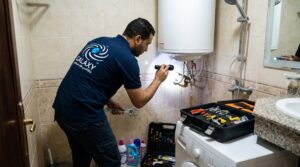
A functional water heater is vital for domestic hygiene and everyday household comfort across Cairo and Giza. However, electric and gas storage water heaters operate continuously under thermal stress, hydraulic pressure, and chemical corrosion. When water begins pooling around the base of the unit or dripping from the casing, homeowners often struggle to determine whether the issue stems from a simple threaded fitting or a catastrophic internal tank rupture.
Ignoring a water heater leak is dangerous. Beyond causing property damage, warped flooring, and structural ceiling dampness in apartments below, a failing pressurized vessel risks electrical shorts, fire hazards, or sudden tank implosion. Furthermore, hard municipal water across Greater Cairo accelerates calcification and sediment accumulation, drastically reducing the lifespan of internal heating elements and sacrificial anode rods.
This engineering diagnostic manual from the plumbing and maintenance specialists at Galaxy Home Service breaks down how to trace leak origins, distinguish superficial condensation from structural metal fatigue, and identify the exact moment replacement becomes mandatory.
1. Safety First: The Immediate Emergency Protocol
Before approaching or touching a leaking water heater, follow these essential safety steps to mitigate electrical and thermal hazards:
-
Cut Electrical Power or Gas Supply: For electric heaters, immediately switch off the dedicated circuit breaker in your electrical distribution board. Never touch a wet heater body while energized. For gas units, rotate the gas valve to the “OFF” position.
-
Shut Off the Cold Water Inlet Valve: Locate the cold water shutoff valve above the heater (usually a lever or gate valve) and turn it clockwise until fully closed to stop incoming water pressure.
-
Avoid Scalding Water: Water inside the tank can exceed 60°C to 70°C. Do not attempt to disconnect lower fittings without allowing the vessel to cool down.
2. Diagnosing the Leak Source: Fixable Component vs. Structural Rupture
Not every leak means the heater is destined for the scrap heap. Water heaters consist of external mechanical fittings attached to an internal steel reservoir:
A. Fixable External Faults (No Tank Replacement Required)
-
Cold Inlet & Hot Outlet Dielectric Nipples: Located at the top of the tank. If moisture originates around the threaded pipes or flexible stainless steel braided hoses, the issue is typically decayed Teflon tape, degraded rubber gaskets, or galvanic corrosion between dissimilar metals. Replacing fittings or flexible connectors resolves the leak.
-
Temperature and Pressure Relief (TPR) Valve: This critical safety valve discharges excess pressure. If water is dripping from the brass TPR valve or its copper discharge tube, it indicates either a failing valve spring or an unsafe buildup of internal pressure caused by a failed thermostat. Replacing the TPR valve is a straightforward repair.
-
Heating Element Gasket (Electric Units): On electric models, water leaking from beneath the lower plastic service cover often comes from the heating element mounting flange. Over time, rubber sealing O-rings harden and fail. Replacing the heating element gasket stops the leak.
B. Fatal Structural Tank Ruptures (Immediate Replacement Mandatory)
-
Pitting Corrosion and Seam Fractures: Storage tanks are constructed from steel lined with porcelain enamel or glass coating. Over years of thermal expansion and contraction, micro-fissures develop in the glass lining. Water contacts bare steel, initiating oxidation. Once rust eats completely through the steel wall, water leaks out through the outer decorative jacket and fiberglass insulation. Internal tank corrosion cannot be welded, patched, or epoxied; replacement is the only safe solution.
3. Warning Signs That Your Water Heater Is Nearing End-of-Life
A water heater rarely fails without giving clear advance warning signals:
-
Rusty, Discolored Hot Water: If hot water runs brown or reddish while cold water remains crystal clear, the interior steel tank or anode rod is actively rusting.
-
Popping, Crackling, or Rumbling Sounds: Hard water leaves calcium carbonate and mineral scale that settles at the tank bottom. As water trapped beneath this sediment layer boils, it produces popping and rumbling noises, creating severe thermal hot spots that accelerate metal fatigue.
-
Depleted Sacrificial Anode Rod: The magnesium or aluminum anode rod sacrifices itself to protect the steel tank from galvanic corrosion. In Egyptian municipal water conditions, anode rods typically deplete within 2 to 3 years. Once exhausted, corrosion attacks the steel body directly.
-
Moisture Weeping from the Base: Persistent dampness or rust staining pooling at the bottom seam of the cylinder indicates internal shell leakage soaking through the fiberglass insulation.
4. Repair vs. Replace: Decision Framework
| Diagnostic Indicator | Minor Repair Required | Full Tank Replacement Required |
| Leak Origin | Top fittings, flex hoses, TPR valve | Bottom rim, lower seam, inner casing |
| Water Clarity | Clear water dripping | Rusty, rust-stained orange/brown water |
| Unit Age | Under 5 years old | Exceeding 6 to 8+ years |
| Operational Sounds | Silent or mild hum | Heavy rumbling, popping, or metallic clinking |
| Sediment Buildup | Flushed annually | Never serviced; thick calcified base |
5. Frequently Asked Questions (FAQ)
Can an internal water heater tank leak be welded or repaired?
No. Pressure vessels lined with internal enamel or glass coating cannot be welded. Welding destroys the surrounding protective coating, and thermal stress combined with water pressure will cause the weld seam to blow out shortly afterward.
What is the typical lifespan of an electric water heater in Egypt?
Under local water conditions, unmaintained water heaters last between 5 and 7 years. Regular annual tank flushing and replacing the sacrificial anode rod every 2 years can extend operational life up to 10 years or more.
How does Galaxy Home Service evaluate water heater replacement and plumbing services?
Evaluations depend on the water heater capacity (30L, 50L, 80L, or central systems), mounting accessibility, whether plumbing supply lines or circuit breakers require upgrading, and the safe removal of the ruptured old unit. Sending photos of the unit and its connections allows technicians to provide an accurate assessment.
Dealing with an active water heater leak or planning a safe replacement? Contact the certified plumbing and home maintenance specialists at Galaxy Home Service for rapid diagnostic and installation services across Cairo and Giza.