
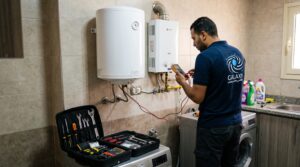
Choosing the right water heating system is one of the most consequential domestic decisions for homeowners across Cairo and Giza. Whether outfitting a newly constructed apartment or replacing a failing legacy unit, balancing energy efficiency, monthly utility bills, initial installation costs, and household safety is critical.
In the Egyptian market, homeowners typically weigh two main contenders: natural gas water heaters (instantaneous/flow heaters or traditional storage tanks) and electric storage water heaters. Each system relies on fundamentally different thermodynamic principles, energy tariffs, and infrastructure requirements.
This technical comparison guide from the HVAC and plumbing specialists at Galaxy Home Service breaks down operational costs, energy efficiency ratios, installation prerequisites, and safety protocols to help you make an informed decision for your home.
1. Thermodynamic Efficiency and Operating Costs
Energy consumption accounts for the largest share of a water heater’s lifetime cost:
-
Gas Water Heaters (High Power, Low Running Cost): Natural gas provides intense thermal output rapidly. Gas instantaneous (instant) heaters heat water on demand, meaning energy is consumed only while the hot water tap is running. Even gas storage tanks heat water faster and typically incur lower monthly energy bills because natural gas tariffs per kilowatt-hour equivalent are generally lower than electricity rates in Egypt.
-
Electric Water Heaters (Continuous Draw): Electric storage tanks rely on resistance heating elements (immersed coils) operating inside an insulated reservoir. Because electricity rates scale progressively with high monthly consumption tiers, keeping 50 to 80 liters of water hot 24/7 can lead to noticeable increases in your monthly electricity bill.
2. Installation Infrastructure and Egyptian Home Constraints
Before purchasing a water heater, your property’s existing infrastructure dictates what can be installed safely:
-
Gas Infrastructure Requirements: Instantaneous gas heaters require a dedicated natural gas supply line and, crucially, a proper chimney or flue pipe to vent toxic exhaust combustion gases (carbon monoxide) outdoors. Installing a gas heater in an unventilated, sealed bathroom is a severe safety violation.
-
Electrical Infrastructure Requirements: Electric water heaters require no gas piping, making them universally adaptable to any bathroom or utility room. However, they demand a heavy-duty electrical circuit—typically a dedicated 16A to 20A breaker with proper copper wiring and grounding—to handle continuous high-amp electrical draws without tripping breakers or melting wall sockets.
3. Safety Protocols and Risk Management
Both systems introduce distinct safety considerations that require diligent maintenance:
-
Gas Safety Concerns: The primary risks associated with gas heaters are gas leaks and carbon monoxide (CO) poisoning due to incomplete combustion or blocked flues. Modern gas units feature flame failure devices and oxygen depletion sensors (ODS), but annual professional servicing of burners and flues is mandatory.
-
Electrical Safety Concerns: Electric heaters combine water and high-voltage electricity in close proximity. A degraded heating element or faulty ground wire can energize the water inside the tank, risking severe electric shock. Installing a working Earth Leakage Circuit Breaker (ELCB) and regularly testing the Temperature and Pressure (TPR) relief valve are vital preventative measures.
4. Gas vs. Electric Water Heaters: Head-to-Head Comparison
| Performance Metric | Natural Gas Water Heaters | Electric Storage Water Heaters |
| Energy Source | Natural Gas (NG) municipal grid | Electricity (220V domestic grid) |
| Hot Water Supply | Instantaneous (on-demand) or storage | Storage tank (limited by tank volume) |
| Monthly Operating Cost | Generally lower due to gas tariffs | Higher due to progressive electricity tiers |
| Installation Complexity | Requires gas piping & certified flue venting | Requires dedicated high-amp electrical circuit |
| Space Footprint | Compact (especially instant wall units) | Bulkier due to insulated storage cylinder |
| Primary Safety Risk | Gas leaks & carbon monoxide buildup | Electrical grounding failure & short circuits |
5. Frequently Asked Questions (FAQ)
Which water heater type heats water faster?
Gas water heaters—particularly instant flow heaters—heat water instantaneously as it passes through the heat exchanger, providing an endless supply. Electric storage tanks must heat an entire reservoir from cold, which typically takes 30 to 60 minutes depending on tank capacity and element wattage.
Are gas water heaters safe to install inside apartment bathrooms in Egypt?
Only if the bathroom features verified, unobstructed structural ventilation and a certified metal flue connected directly to an exterior airshaft. Installing unvented gas water heaters in sealed, small bathrooms is extremely dangerous and strictly prohibited by plumbing codes.
How does Galaxy Home Service evaluate water heater installations?
Assessments include verifying gas line pressure and flue integrity, checking electrical circuit breaker capacity and wire gauge, evaluating bathroom spatial dimensions, and ensuring safe water supply connections. Contacting our team with photos of your utility setup ensures an accurate installation evaluation.
Weighing a gas versus electric water heater upgrade or needing professional installation? Contact the certified plumbing and HVAC specialists at Galaxy Home Service for expert guidance and safe installation across Cairo and Giza.