
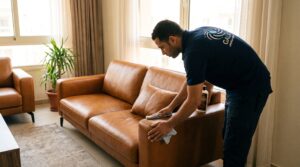
Investing in a leather sofa brings unmatched sophistication, durability, and comfort to any living space. However, both genuine and synthetic leather are highly susceptible to environmental degradation. In the dusty, arid climate across Cairo and Giza, unprotected leather quickly loses its natural moisture. Without routine maintenance, it becomes vulnerable to cracking, fading, and peeling caused by airborne grit, body oils, and UV exposure.
Many homeowners treat leather like standard fabric, applying harsh household detergents or excessive water. This strip-mines the material of its natural oils, leading to permanent, costly damage.
This guide from the experts at Galaxy Home Service breaks down best practices for identifying your leather type, execute deep cleaning protocols, apply nourishing conditioners, and protect your furniture for the long term.
1. Identify Your Leather: Genuine vs. Synthetic
Before applying any product, you must verify the type of leather to avoid damaging the material:
-
Aniline & Semi-Aniline (Genuine): Luxurious, breathable, and highly porous. Because they lack heavy protective coatings, these natural hides are exceptionally sensitive to liquid spills, staining, and drying out, requiring specialized, pH-balanced care.
-
Pigmented/Protected (Genuine): The most common residential genuine leather. It features a protective topcoat that resists spills and fading, making it more resilient, though still vulnerable to friction wear and cracking.
-
Suede & Nubuck: Buffed to create a velvet-like nap. These require dedicated dry-cleaning brushes and specialized waterproofing, as liquids can permanently ruin their texture.
-
Synthetic (Faux, PU, Vinyl): Non-porous plastic-based materials. While they do not absorb conditioners, they are prone to peeling, stiffening, and cracking from UV exposure and body oils, requiring distinct surface protectants.
2. Pre-Cleaning: The Critical First Steps
Applying conditioners or liquid cleaners over loose dust creates an abrasive paste that can micro-scratch the leather surface. Always prepare the sofa first:
-
Vacuum with a Soft Brush: Use a high-suction vacuum with a clean, soft-bristled brush attachment. Pay extra attention to the deep crevices, seams, and underneath cushions where sharp grit and crumbs gather and wear down seams.
-
Dust with Microfiber: Wipe down the entire sofa with a dry, lint-free microfiber cloth to remove finer airborne particles.
-
Inspect for Wear: Check for areas where the natural topcoat has worn away (common on armrests and headrests). These vulnerable spots absorb liquids rapidly and must be treated with extreme caution.
3. Deep Cleaning Protocol (Without Over-Wetting)
Leather is highly sensitive to pH extremes and excessive moisture. Never use multipurpose sprays, bleach, ammonia, or saddle soap, which can break down natural fibers and dissolve protective finishes.
-
Use a pH-Balanced Cleaner: Opt for a dedicated, professional-grade leather cleaner.
-
Apply as Foam, Not Liquid: Spray the cleaner onto a sponge or microfiber cloth and agitate it to create a foam. Never spray liquids directly onto porous leather.
-
Gently Clean in Circular Motions: Work in small, manageable sections, gently wiping the foam over the surface. Avoid aggressive scrubbing, which can rub grit into the grain or strip pigment.
-
Wipe Dry Immediately: Use a separate, clean, damp microfiber cloth to pick up the lifted grime and soap residue, then immediately buff the area dry with a third cloth. Never allow moisture to sit or air-dry on leather.
4. The Art of Conditioning: Restoring Natural Oils
Genuine leather is a natural, porous material that relies on internal moisture and oils to remain supple. Over time, environmental heat and dry indoor air cause these oils to evaporate, leading to stiffness and cracking. Conditioning restores this lost vitality.
-
Choose the Right Conditioner: Use a high-quality leather cream or balm containing natural oils and waxes (such as beeswax or lanolin). Avoid products containing silicone or petroleum, which create a sticky barrier that traps dust and prevents the leather from breathing.
-
Apply Sparingly: A little goes a long way. Put a small amount of conditioning cream onto a microfiber applicator pad and massage it gently into the leather using circular, overlapping motions. Focus extra attention on high-use areas like seat cushions, armrests, and headrests.
-
Allow to Penetrate: Let the conditioner sit for 15 to 30 minutes to allow the pores to absorb the nourishing oils.
-
Buff to a Natural Finish: Go over the entire sofa with a clean, dry microfiber cloth, buffing away any unabsorbed residue. This prevents dust from sticking and restores a rich, natural luster.
5. Daily Protection and Preventive Care
Keeping your leather sofa in peak condition requires mindful daily habits:
-
Placement Matters: Position your leather furniture away from direct sunlight (which causes fading and drying) and heating vents, which accelerate moisture loss.
-
Prompt Spill Management: If a spill occurs, blot it immediately with a dry, absorbent cloth. Never rub, as this pushes the liquid deeper into the porous grain.
-
Weekly Maintenance: Dust the sofa weekly with a dry microfiber cloth and vacuum the crevices to prevent grit from acting like sandpaper on the seams.
-
Conditioning Schedule: Apply a dedicated leather conditioner every 6 to 12 months, depending on usage and sunlight exposure.
6. Frequently Asked Questions (FAQ)
Can I machine-wash removable leather cushion covers?
Absolutely not. Removable covers should never be submerged in water, placed in a washing machine, or dry-cleaned, as this will dry out, shrink, and ruin the hide. They should always be cleaned and conditioned by hand on the spot.
How do I remove ink or grease stains from leather?
Ink and grease are highly challenging because they penetrate the leather’s natural pores. Blot grease immediately with a dry cloth; sometimes, applying a little cornstarch and letting it sit overnight can help absorb deep oils. For ink, consult a professional team, as store-bought remedies often strip the sofa’s original dye.
Why is my faux/synthetic leather sofa peeling, and can it be conditioned?
Synthetic leathers (PU/Vinyl) do not have natural pores and cannot absorb conditioners. Peeling usually occurs when the plastic layers degrade due to friction, body oils, or UV exposure. Once peeling starts, it is irreversible, but regular wiping with a damp cloth and mild faux-leather protectants can help prevent it on undamaged areas.
How are professional leather cleaning and conditioning services priced?
Service requirements and costs are evaluated based on the seating capacity, the leather’s condition (standard maintenance vs. dry, heavily soiled restoration), and whether specialized stain treatments are needed. Providing clear photos and details about the furniture’s history helps us provide an accurate estimate.
Ready to bring back the rich luster and softness of your leather furniture? Explore the specialized Professional Leather Sofa Cleaning & Conditioning Services offered by Galaxy Home Service across Cairo and Giza.