
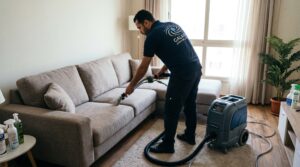
Upholstered furniture like sofas, armchairs, and sectional couches is the heart of everyday home life. However, the multi-layered textile fibers, padding, and foam used in furniture function like a giant sponge. Over time, they absorb, trap, and lock in airborne particulate matter, moisture, and biological odors.
In Cairo and Giza residences, these trapped odors—ranging from stubborn cigarette smoke to pet dander and musty dampness—frequently worsen due to high indoor dust loads and humidity.
Many homeowners try to solve upholstery odor issues by heavily spraying store-bought air fresheners. However, these artificial scents merely cover up the odor momentarily while adding moisture that can actually feed odor-causing bacteria.
This technical guide from the indoor sanitization experts at Galaxy Home Service breaks down how various odors bind to upholstery, step-by-step extraction and neutralization protocols, and professional solutions to permanently restore freshness to your home.
1. Why Upholstery Traps and Holds Odors
Understanding how various odor sources bind to upholstery fibers is the first step in successful, permanent eradication:
-
Pet Odors (Natural Oils and Biological Matter): Dogs and cats naturally secrete sebum (natural skin oils) and dander that rub off onto sofa cushions. If pet hair and skin flakes aren’t regularly vacuumed, they embed deeply into the weave. Combined with trace biological accidents (such as urine or saliva), bacteria feed on this organic matter, releasing persistent, ammonia-rich odors.
-
Environmental Tobacco & Cooking Smoke: Cigarette and cooking smoke contain micro-particles of tar, nicotine, and vaporized oils. These oily residues settle onto the porous fabric and penetrate the open-cell padding below. As they oxidize, they continuously release an acrid, stale smell.
-
Musty and Damp Smells (Molds and Mildews): When fabric is exposed to spills, high humidity, or incorrect “soapy” wet cleaning without rapid extraction, the interior filling remains damp for days. This dark, moist environment is the perfect breeding ground for mold and mildew spores, which release volatile organic compounds (VOCs) that smell persistently musty.
2. Step 1: Deep Dry Particulate Extraction
You can never eliminate odors by applying liquids or neutralizers directly over deep-seated dust and pet dander. Doing so only creates a muddy, smelly residue within the yarn.
-
Exhaustive High-Suction Vacuuming: Use a high-efficiency particulate air (HEPA) vacuum with a clean upholstery and crevice tool. Strip the sofa of all removable cushions and vacuum every seam, piping, tufted button, and the base deck.
-
Mechanical Agitation: Gently brush or tap the fabric during vacuuming to help loosen embedded pet hair, dander, and dry dust trapped between the woven fibers.
3. Step 2: Biological and Chemical Neutralization
To get rid of deep-seated odors, you must break down the organic or chemical bonds of the smell at the molecular level, rather than masking it.
-
For Pet and Biological Odors : Use a professional-grade cleaner. naturally break down the organic proteins, fats, and urea in pet dander and accidents, neutralizing the source rather than just covering it.
-
Method: Lightly mist the cleaner over the affected area, brush gently, and allow them to remain damp for several hours to do their work.
-
-
For Smoke and General Odors (Alkaline & Active Counteractants): Use specialized odor counteractants. These break down the acidic tar and oily smoke residues that bind to synthetic and natural upholstery yarns.
-
The Baking Soda Technique (DIY Maintenance): For mild odors, liberally sprinkle sodium bicarbonate (baking soda) over dry upholstery. Let it sit for 8 to 12 hours (overnight) to absorb surface-level oils and moisture, then vacuum it up completely using a brush attachment.
4. Step 3: Hot Water and Shampoo Extraction (Professional Deep Wash)
For deep-seated, stubborn odors, surface treatments aren’t enough. You need to wash and pull out the biological matter trapped deep within the padding:
-
The Injection-Extraction Method: Using a professional extraction machine, a heated solution of water and neutralizing shampoo is injected deep into the fabric under pressure, instantly breaking down trapped oils and odorous grime.
-
High-Powered Wet Extraction: The extraction wand immediately sucks the dirty solution back out of the fabric with massive vacuum force, pulling the dissolved odor-causing contaminants into the machine’s waste tank.
-
Preventing Moisture Over-Saturation: This process must be done quickly and with maximum suction. Over-wetting or leaving the furniture damp will only encourage mold growth and create worse damp smells.
5. Step 4: Rapid Air Dehumidification and Drying
Controlled, rapid drying is critical to verify the success of odor removal and prevent any musty musty smells from developing:
-
Accelerate Airflow: Use high-velocity air movers, ceiling fans, and open windows to keep air circulating over the treated upholstery.
-
Prevent Indoor Humidity Buildup: If you are drying multiple large sofas in an enclosed space, run a dehumidifier to quickly draw moisture out of the air.
-
Let It Cure: Ensure the furniture is 100% dry to the touch before replacing cushions or using it.
6. Frequently Asked Questions (FAQ)
Can I machine-wash removable cushion covers to get rid of odors?
Only if the care tag explicitly allows it (look for “W” or “W/S” codes). Be very careful: many natural fabrics will shrink, lose their shape, or fray at the seams in a washing machine, making it impossible to fit them back over the foam. Whenever possible, clean and treat the covers while they are still on the cushions to preserve their shape.
Is professional odor removal safe for children and pets?
Yes. Professional teams use eco-friendly, non-toxic, and biodegradable enzyme treatments and pH-neutral extraction shampoos. These completely break down and neutralize odors without leaving any harmful chemical residues, making them completely safe for families and pets once dry.
Why does the musty smell sometimes get stronger right after cleaning?
This is a natural part of the process known as “off-gassing.” As deep moisture and specialized cleaning solutions begin to break down the embedded grime, trapped odors are drawn to the surface. As long as the furniture dries quickly and completely with plenty of airflow, this temporary smell will disappear, leaving you with a fresh, odor-free sofa.
How is the cost for professional upholstery odor removal calculated?
Pricing is based on several key factors: the size and seating capacity of the furniture, the type of fabric (natural vs. synthetic), the severity and source of the odor (standard freshening vs. heavy pet or smoke restoration), and any pre-treatments or deep extraction needed. Providing clear photos and details about the furniture help us give you an accurate estimate.
Ready to banish stubborn smells and restore the true freshness of your home? Discover the specialized Professional Upholstery Odor Removal & Deep Cleaning Services offered by Galaxy Home Service across Cairo and Giza.