
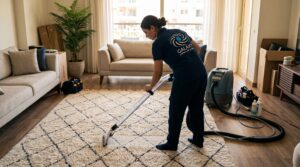
Authentic handmade Moroccan wool rugs—such as the plush, high-pile Beni Ourain or the intricate flat-weave Kelims crafted across the Atlas Mountains—are not merely floor coverings; they are prized artistic investments and cultural heirlooms. With their distinctive organic diamond motifs, luxurious natural sheep’s wool fibers, and untreated lanolin content, these rugs bring warmth and timeless elegance to upscale residences across Cairo and Giza.
However, genuine Moroccan rugs require specialized care that differs fundamentally from mass-produced synthetic carpets. The long, natural wool fibers act like micro-filters, capturing desert dust and urban particulate matter deep within the knots. Inappropriate domestic cleaning—such as soaking with standard alkaline laundry detergents, steam-cleaning, or aggressive mechanized agitation—strips natural lanolin oils, causes catastrophic dye bleeding, and permanently mats the wool pile.
This comprehensive preservation guide from the fine textile specialists at Galaxy Home Service breaks down the structural biology of Moroccan wool, routine preventative care, safe emergency spot cleaning, and advanced professional extraction protocols.
1. Understanding Moroccan Wool: Lanolin and Fiber Architecture
Handwoven Berber rugs are made from 100% natural, unbleached sheep’s wool, often hand-spun and knotted onto pure wool or cotton warps:
-
The Protective Lanolin Shield: Natural sheep’s wool contains lanolin, a waxy organic coating that repels liquids and prevents staining naturally. Using harsh household degreasers or hot steam strips this lanolin layer, leaving the wool brittle, dull, and hyper-absorbent to future spills.
-
The High-Pile Dust Trap: A Beni Ourain rug’s deep pile (often 2 to 5 cm thick) hides pounds of dry silica sand, grit, and pet dander near the base knots without showing on the surface. If wet cleaning is attempted before removing this deep dry debris, it turns into an abrasive mud that cuts the delicate warp threads from the inside out.
-
Natural Vegetable and Mineral Dyes: Authentic vintage pieces use natural indigo, saffron, walnut husks, and henna for coloration. These dyes are sensitive to pH shifts and bleed rapidly when exposed to standard alkaline cleaning agents.
2. Essential Routine Care: What to Do (and What to Avoid)
Maintaining a Moroccan wool rug in pristine condition requires a calibrated weekly routine:
Vacuuming Protocols (Suction Only)
-
Never Use a Rotary Beater Bar Brush: Rotating beater brushes aggressively pull, fray, and unravel hand-spun wool strands, causing excessive shedding and permanent fringe damage.
-
Suction-Only Tooling: Always use a smooth floor attachment with the beater brush disengaged. Vacuum along the natural direction of the pile, never back and forth.
-
The Flip-and-Vacuum Technique: Once a month, flip the rug face down and vacuum the back of the rug with moderate suction. This vibrations shake trapped gritty sand out of the foundation knots onto the floor, where it can be swept away easily.
Rotation and Sun Airing
-
Rotate Every 6 Months: Equalize foot traffic patterns and sun exposure across the rug to prevent uneven fiber wear or selective fading.
-
Controlled Sun-Airing: Hang the rug outdoors in fresh air for 2 to 3 hours twice a year to evaporate trapped moisture and naturally neutralize ambient odors. Avoid prolonged midday direct sun exposure, which causes natural dyes to fade.
3. Emergency Spot Removal: The Safe First-Aid Protocol
When an accidental spill occurs—coffee, juice, or pet accidents—act immediately with non-destructive methods:
-
Blot Immediately (Zero Rubbing): Press a thick stack of clean, dry white cotton towels firmly onto the spill to wick up moisture. Rubbing pushes liquid deeper into the dense wool core and permanently mats the pile.
-
Cold Water Mist Only: Lightly mist cool, pure water onto a clean cloth (never pour liquid directly onto the rug) and blot repeatedly to dilute the pigment.
-
Slightly Acidic pH Balancing: For organic or animal stains, lightly dab with a heavily diluted solution of equal parts white vinegar and cold water (pH 4.5–5.5). Wool thrives in a slightly acidic environment, which stabilizes natural dyes and prevents color bleeding.
-
Elevate to Accelerate Drying: Place a riser, plastic bowl, or towel under the damp section to allow air circulation both above and beneath the backing, preventing mold growth and warp rot.
4. Professional Non-Steam Foam Extraction for Precious Wool Rugs
Standard automated rug-laundering facilities or hot steam treatments ruin genuine Moroccan wool. Professional restoration demands gentle physical and pneumatic extraction:
-
Deep Mechanical Dusting (Beat-Free Vibration): Specialized low-frequency vibration vacuums safely extract pounds of embedded desert sand from deep inside the warp and weft before introducing moisture.
-
Cold-Water pH-Balanced Wool Cleansers: Utilizing lanolin-enriched, neutral-to-acidic cleaning agents specifically formulated to lift soil without stripping natural sheep oils or disturbing fragile mineral dyes.
-
Controlled Non-Steam Foam Extraction: Applying controlled dense foam that traps surface and subsurface grime, immediately followed by high-suction negative-pressure extraction wands. This reclaims over 90% of moisture in milliseconds, keeping the inner backing dry.
-
Hand Pile Grooming & Controlled Dehumidified Curing: Hand-combing the wool fibers in their natural lay using soft velvet combs, followed by placement in a climate-controlled room with high-velocity air movers to complete full curing within 6 to 12 hours.
5. Frequently Asked Questions (FAQ)
Is it normal for my new Moroccan wool rug to shed excessively?
Yes. Authentic hand-spun wool rugs naturally shed loose staple fibers during the first several months of use. Regular, gentle suction-only vacuuming will gradually reduce shedding without diminishing the rug’s thickness or structural integrity.
Why should steam cleaning never be used on Moroccan rugs?
Pressurized thermal steam exceeds wool’s heat tolerance, stripping its natural lanolin protective oils, causing irreversible fiber shrinking, and dissolving vegetable dyes, which leads to permanent color bleeding across ivory backgrounds.
How are professional Moroccan wool rug cleaning services priced?
Valuation is based on the rug’s exact square meterage, pile density (high-pile Beni Ourain vs. flat-weave Kelim), fiber age and fragility, and the presence of organic pet stains or past dye runs requiring specialized stabilization. Providing clear photos of the rug and fringes allows technicians to evaluate the piece accurately.
Own a valuable Moroccan, Berber, or handmade oriental wool rug that needs restorative care? Trust the dedicated textile preservation team at Galaxy Home Service for safe, lanolin-preserving deep extraction cleaning across Cairo and Giza.